Residential Concrete

Residential Concrete is Our

Specialty

Concrete

Floors

Get a free

Estimate

Professional floors built to last through Michigan winters. Quality materials, expert craftsmanship, and a finish that will last for years.

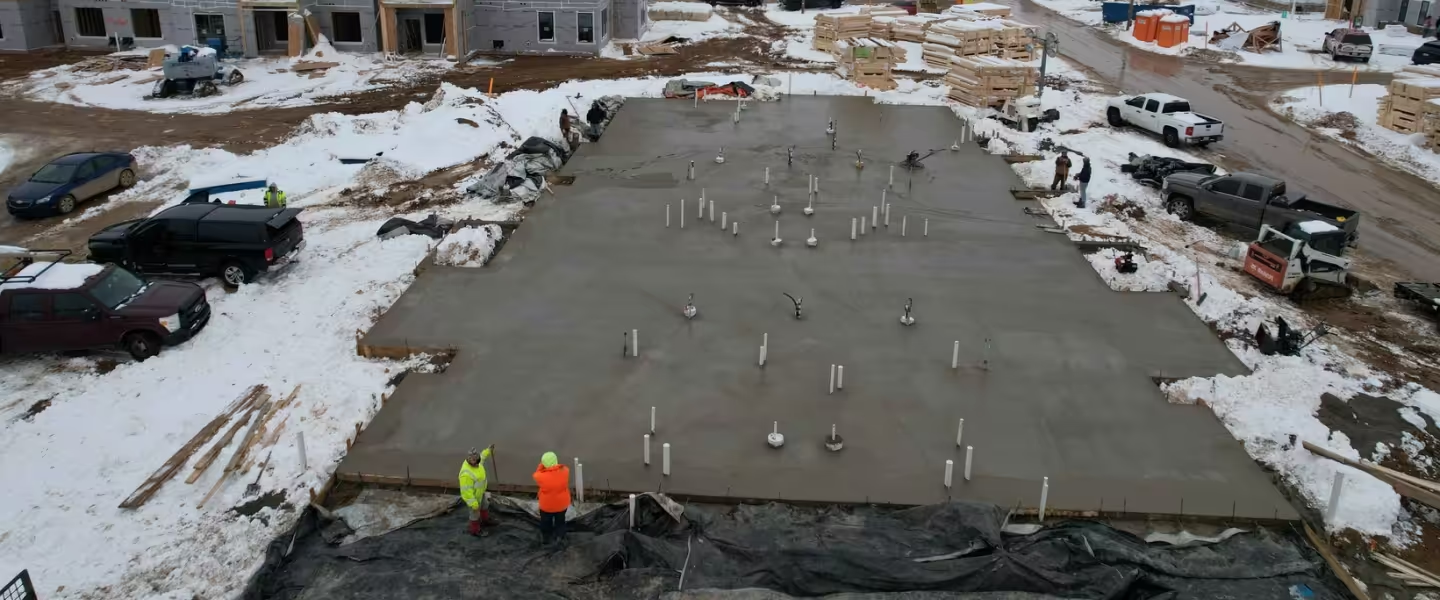
Concrete floor installation in Grand Rapids Michigan

Smooth, Level, and Built for the Long Haul

Concrete floors for garages, basements, and utility spaces need to be flat, properly sloped for drainage, and sealed to resist moisture and staining. Pro Concrete Services pours garage floors, basement slabs, shop floors, and utility pads with the same attention to prep and finish that goes into every project we touch.

A well-poured concrete floor is the foundation for everything that happens in your garage or basement. Whether you’re installing epoxy coating later, using the space as a workshop, or just want a clean, durable surface, it starts with the right pour.
What’s Included in Every Floor Project

  • Sub-grade preparation — Existing material removed and graded
  • Vapor barrier — Poly sheeting installed under slab for moisture control where applicable
  • Reinforcement — Wire mesh throughout for crack resistance
  • Proper slope to drain — Pitched toward floor drains where applicable
  • Machine-troweled or broom finish — smooth finish for epoxy-ready surface or broom for added traction
  • Control joints — Cut to manage cracking in larger slabs
  • Full cleanup

How Your Floor Gets Poured

  1. Free estimate and site assessment — We evaluate existing conditions, drainage needs, and thickness requirements
  2. Sub-grade prep — Existing material removed, area graded and compacted
  3. Vapor barrier and reinforcement installed
  4. Concrete poured and finished — Machine troweled to a flat, smooth surface
  5. Curing — Light foot traffic after 48 hours. Vehicle traffic after 7 days
  6. Final walkthrough

Why a Properly Poured Concrete Floor Matters

  • Flat and level — No uneven spots that cause cabinets, vehicles, or equipment to sit unlevel
  • Ready for epoxy or coatings — Machine-troweled finish gives coating systems the adhesion surface they need
  • Moisture resistant — Vapor barrier and proper mix design keep moisture from coming through
  • Durable for decades — A properly poured garage floor handles daily vehicle traffic for 30 or more years

Get a Free Estimate

Full Name
Email
Phone
Best Time To Call
Thank you! Your submission has been received!
Oops! Something went wrong while submitting the form.
Explore More

Residential Concrete is Our

Specialty

Other Concrete

Services

Get a free

Estimate

Concrete driveway installation in Grand Rapids Michigan
Driveways

Driveways

Built to handle Michigan winters and daily traffic. Clean edges, proper drainage, and a finish that lasts.

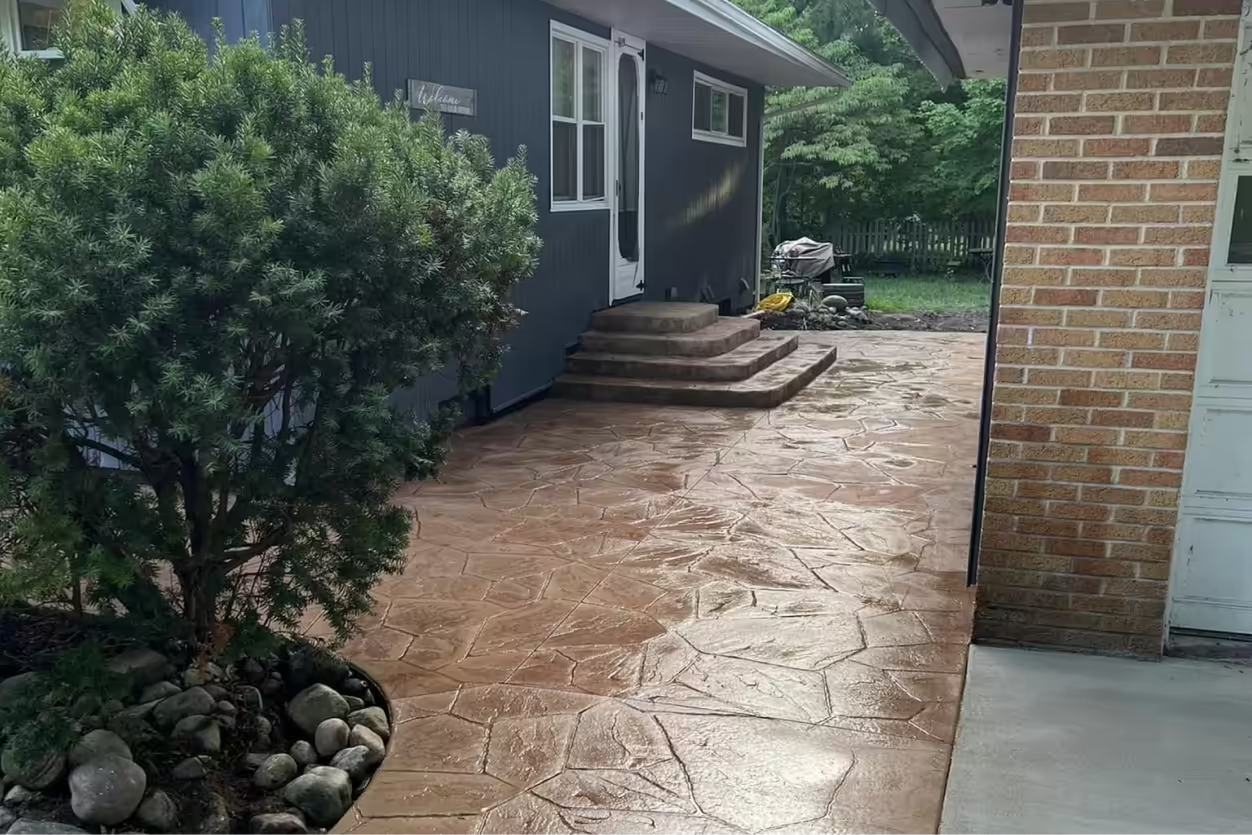
Concrete patio installation in Grand Rapids Michigan
Patios

Patios

Transform your backyard into an outdoor living space. Custom shapes, sizes, and finishes to fit your home.

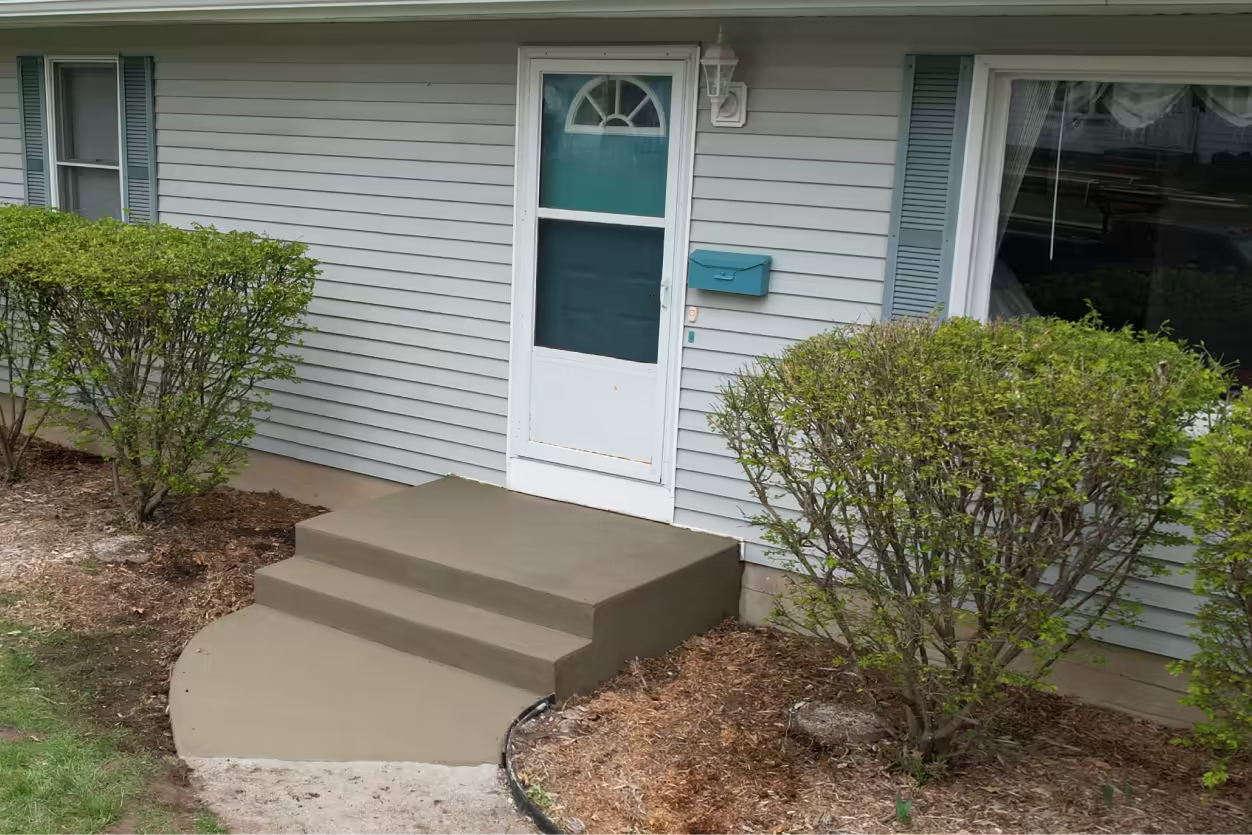
Concrete front entry steps installed in West Michigan
Steps

Steps

Functional and finished. Concrete steps built to complement your home's entrance and withstand heavy use.
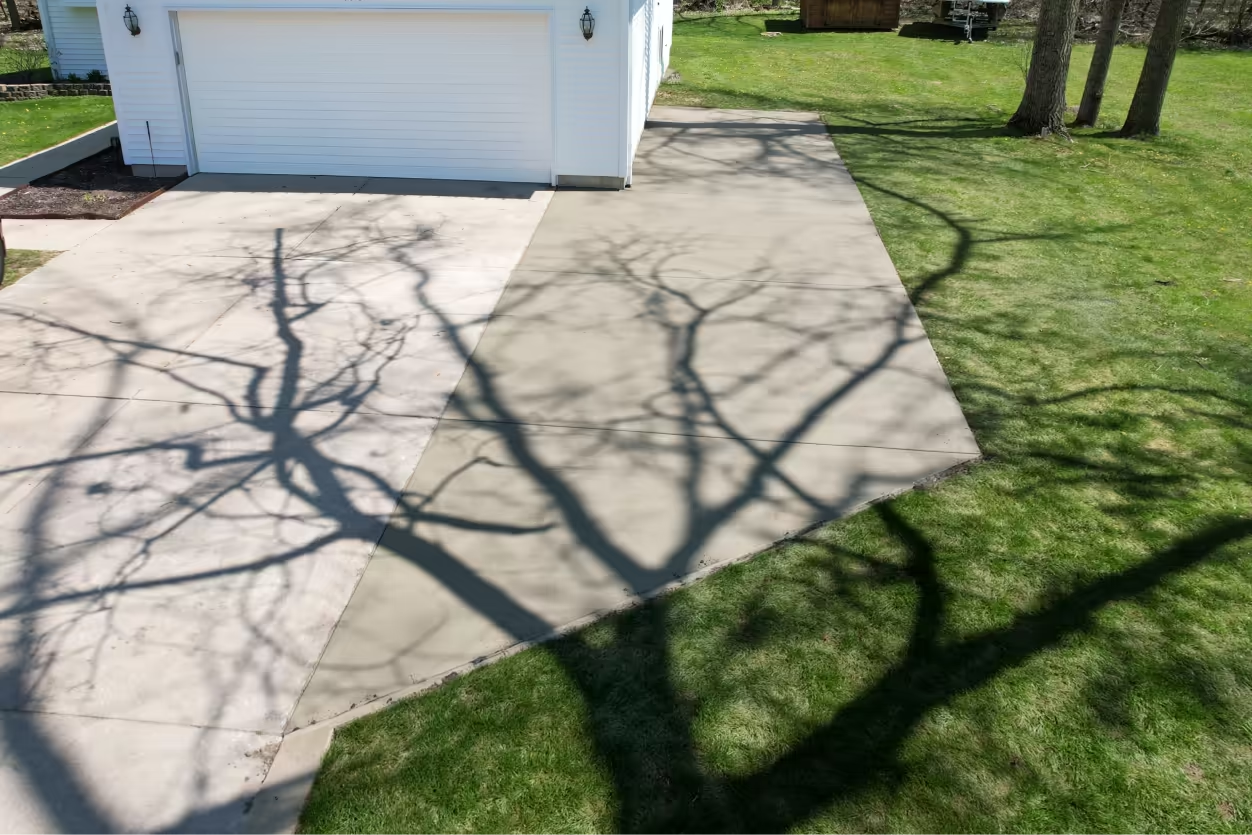
Concrete driveway expansion installation in Grand Rapids Michigan
Driveway Expansions

Driveway Expansions

Need more space? We extend existing driveways with seamless concrete that matches your current work.
Concrete 101

Residential Concrete is Our

Specialty

Got Questions? We've Got

Answers

Get a free

Estimate

Can't find your answer? Give us a call.

How thick should a garage floor be?

4 inches is standard for a residential garage floor with passenger vehicle traffic. If you park trucks, heavy equipment, or plan to install a car lift, 5 to 6 inches with rebar is recommended.

Should I seal my garage floor after it's poured?

Sealing is recommended but not required. A penetrating sealer applied after the curing period helps resist oil stains, moisture, and road salt tracking. If you plan to apply an epoxy coating, wait at least 28 days after the pour and confirm moisture levels before application.

How do I prevent my garage floor from cracking?

Control joints cut into the slab give the concrete a place to crack in a controlled, straight line rather than randomly. Combined with proper subbase preparation and the right mix design, a well-poured floor will develop minimal cracking over its lifetime.

Can you pour a new floor over an existing concrete floor?

Sometimes, but it depends on the condition of the existing slab and the ceiling height available. We assess on a case-by-case basis. In many situations, removing and replacing the existing floor is the better long-term solution.

How long before I can park on a new garage floor?

Foot traffic is safe after 48 hours. Passenger vehicles after 7 days. Heavy vehicles after 28 days when possible. We'll walk you through the curing timeline before we leave.


Start Your Project Today

Residential Concrete is Our

Specialty

Ready to Upgrade Your Home's

Curb Appeal

Get a free

Estimate